

Jamie’s on the Web LLC
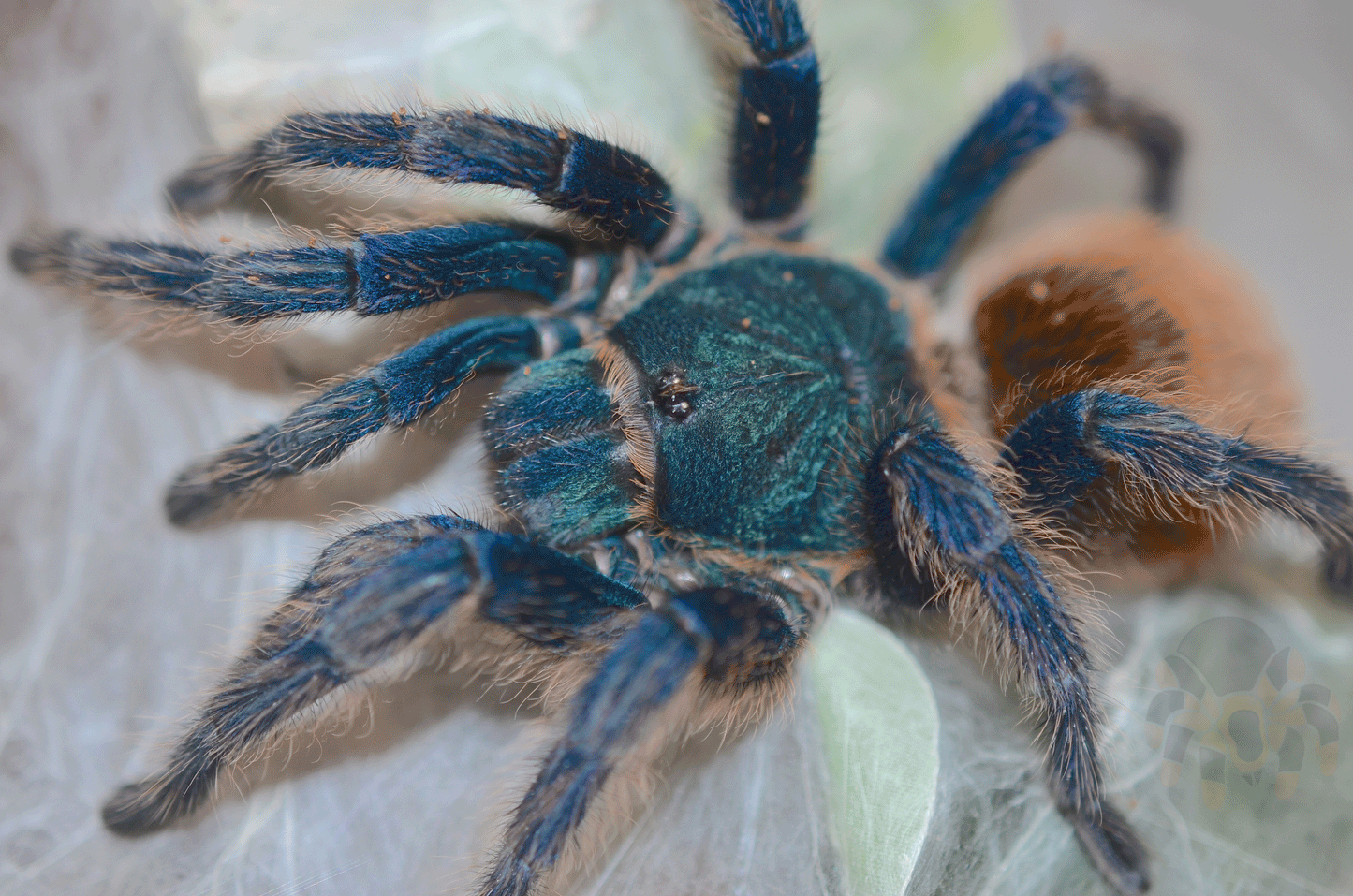
Chromatopelma cyaneopubescens (Green bottle blue "GBB") 2- 2 1/2”+ FEMALE
Chromatopelma cyaneopubescens (Green bottle blue "GBB") 2- 2 1/2”+ FEMALE
Couldn't load pickup availability
Chromatopelma cyaneopubescens is commonly known as the Green Bottle Blue or “GBB” for short. This colorful and vibrant New World tarantula native to the arid scrublands of Paraguana, Northern Venezuela. This is one of the most sought-after tarantula species due to its striking coloration. GBB’s metallic blue legs, a vivid orange abdomen, and a greenish carapace, along with the dramatic color changes it displays as it matures through successive molts are something to behold!
Unlike many tarantulas, the GBB is a very heavy webber, creating extensive sheets and tunnels of silk across its enclosure. While primarily terrestrial, it appreciates plenty of anchor points such as cork bark, branches, and foliage to support its webbing behavior. It is an active species that spends much of its time out in the open, making it especially rewarding to observe.
Though generally not aggressive, Chromatopelma cyaneopubescens can be quick and defensive, relying on speed, threat postures, and hair flicking when disturbed. It has a strong feeding response and one of the best appetites among tarantulas, readily accepting a wide variety of insect prey. Often, I am surprised at the ferocity GBB will tackle feeders that might be too large for other species.
With its brilliant colors, energetic behavior, ferocious feeding response and heavy webbing, the Green Bottle Blue stands out as a captivating and exciting species for both beginners and experienced enthusiasts alike.
Origin: New World. Native to the arid scrublands of Paraguana, Northern Venezuela
Difficulty: Beginner
Type: Terrestrial/Semi-Arboreal (they will often make their webs at the base of trees, making them “Arboreal”
Adult Size: 4.5-6”
Growth speed: Fast
Longevity: Males 3-6 years, females 8-14+ years
Temperament: Docile yet skittish. If agitated they may flee and/or flick urticating hairs. Bites of this species are rare.
Bite potency: Mild
Urticating hairs: Yes
Ideal Temperature: 70 to 75°
Humidity: Medium
Interesting Fact: Large females can become more stocky with time, even if their leg-span doesn’t change much with a molt. Although this characteristic is quite common among many species is it is certainly an impressive trait to see on such a large tarantula.
Enclosure: Good ventilation is a must and safety should be a top priority when choosing and designing your tarantulas enclosure. The enclosure should not be too tall as to give such a heavy species an opportunity to fall and injure itself. For spiderlings under about 1-1 1/4″ we recommend the 2.25 x 2.25 x 4.5” - Terrestrial Kit. For specimens over 1″ to about 2″ we recommend the 4x4x6” - Terrestrial Kit - Magnetic Lock or the 4x4x5 Classic Porthole.
Specimens over 2″ and to about 5” can go into an 8x8x14” Terrestrial Enclosure.
Substrate: While most adults will adopt a hide, slings often prefer to burrow. Cocofiber, vermiculite, peat moss and/or potting soil (or a mix) are all excellent substrate choices. Please make sure the substrate you choose is organic and chemical/fertilizer free. Do not use sand, pebbles, rocks or wood chips or anything else that could potentially cut or injure the tarantula.
In many cases a larger specimen would rather adopt or retrofit an existing hide than create it’s own from deep substrate. Cork tubes half buried in substrate are what we use for our adult females. The specimen will excavate one side of the cork tube to it’s liking. I like to think this makes the tarantula feel “at home” while minimizing the time and effort for the spider to settle in.
Spiderlings will often desire to create their own home by excavating a burrow. A tarantula with this talent and preference for tunneling is referred to as an obligate burrower. To encourage this natural behavior we recommend semi-moist substrate at least twice, and ideally three times as deep as the tarantulas DLS. The 2.25 x 2.25 x 4.5” - Terrestrial Kit , 4x4x6” - Terrestrial Kit - Magnetic Lock and the 4x4x5 Classic Porthole Can all be all assembled up to encourage burrowing.
Water: Larger spiders 2” and over should be provided with a shallow water dish in order to drink. The water bowl should be rinsed our every time it is refilled. Being a scrubland species they will not require as frequent misting as an arboreal species however, I recommend keeping one corner of the enclosure lightly misted, especially if there is no water bowl.
Feeding: Adults will eat every 6-14 days depending on the size of the spider and it’s prey. Spiderlings should eat more often, every 5-10 days. Adults may be fed crickets, mealworms or roaches. Spiderlings under .75” can only eat food small enough for it to overpower. This includes pinhead crickets, flightless fruit flies & freshly hatched “pinhead” rusty red roaches. It is not advised to feed your tarantula wild-caught food. It could contain parasites or pesticides that could be fatal to your pet. Keep your tarantulas enclosure clean. food waste left in the enclosure will invite mold, mildew, mites, flies and other pests. It is advised to remove uneaten prey items after 3-12 hours. If using a feeder who will not “bother” a tarantula such as dubia roaches it is alright to leave them in the enclosure as long as they are not causing stress to the specimen. A more detailed feeding, misting & troubleshooting guide can be found HERE.
Share